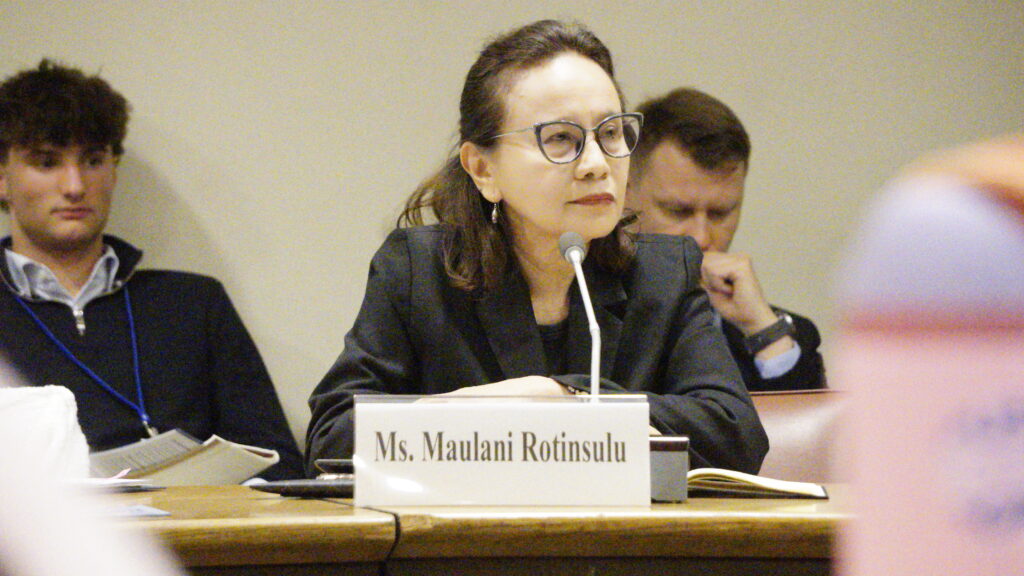
New York, 12 March 2026 — ASEAN Disability Forum (ADF) Secretary General, Ms. Maulani A. Rotinsulu, spoke at the side event titled “No Woman, No Mother Left Behind: Disability Inclusive Responses to Gender-Based Violence”, organized by the Government of Lithuania during the 70th Session of the Commission on the Status of Women (CSW70) at the United Nations Headquarters.
The session highlighted the urgent need to strengthen gender-based violence (GBV) responses that are inclusive of women and girls with disabilities, who continue to face heightened risks and systemic barriers in accessing protection and justice. In her intervention, Ms. Maulani emphasized that disability inclusion must be embedded within laws, policies, and standards addressing GBV. She underscored that women with disabilities remain disproportionately affected, noting that globally, they are significantly more likely to experience violence compared to other women. She further highlighted the wide range of violence experienced by women with disabilities, including forced sterilization, forced contraception, and other violations of bodily autonomy. She also pointed to forms of abuse such as denial of personal mobility, withholding of essential support for daily living, verbal and psychological abuse, technology-facilitated violence, and even trafficking for exploitation.
Ms. Maulani stressed that beyond the high prevalence of violence, women with disabilities also face major barriers in accessing justice. “In many cases, women with disabilities are denied the opportunity to report violence or to be heard in court due to inaccessible systems, discriminatory assumptions, and lack of support,” she noted. She also raised concerns about inaccessible reporting mechanisms, lack of sign language interpreters or accessible information, and court systems that exclude women with disabilities by design. In some contexts, women are even denied legal standing or considered incapable of giving testimony.
Despite these challenges, Ms. Maulani pointed out that women with disabilities are still often excluded from policymaking and advocacy spaces addressing GBV, or only included in tokenistic ways. She emphasized that for many women with disabilities, reporting violence is only possible when support systems are accessible, safe, and trusted. This includes accessible hotlines, inclusive shelters, psychosocial and legal support, communication assistance, supported decision-making mechanisms, and practical services such as childcare. To address these gaps, Ms. Maulani called for concrete actions. She stressed the need for disability-responsive laws that recognize the legal capacity of women with disabilities and ensure their full control over their own bodies. She also urged states to expand the definition of GBV to include disability-specific forms of violence, such as withdrawal of support, economic coercion, and technology-facilitated abuse.
Furthermore, she emphasized that policies must shift from an ableist approach to a human rights-based approach, addressing the root causes of discrimination and violence. She also highlighted the importance of integrated services that connect health systems, justice institutions, and social services to ensure survivors can safely move from reporting to protection and justice. Ms. Maulani concluded by stressing the importance of meaningful participation of women with disabilities in all GBV prevention and response efforts. “Women with disabilities must not only be included, but meaningfully engaged, with adequate resources and accessible processes, and supported by strong organizations of persons with disabilities,” she stated. She closed her remarks by reaffirming that embedding disability inclusion into laws, standards, and prevention strategies is essential to ensure that no woman or girl with disabilities is left behind in the fight against violence and discrimination.
