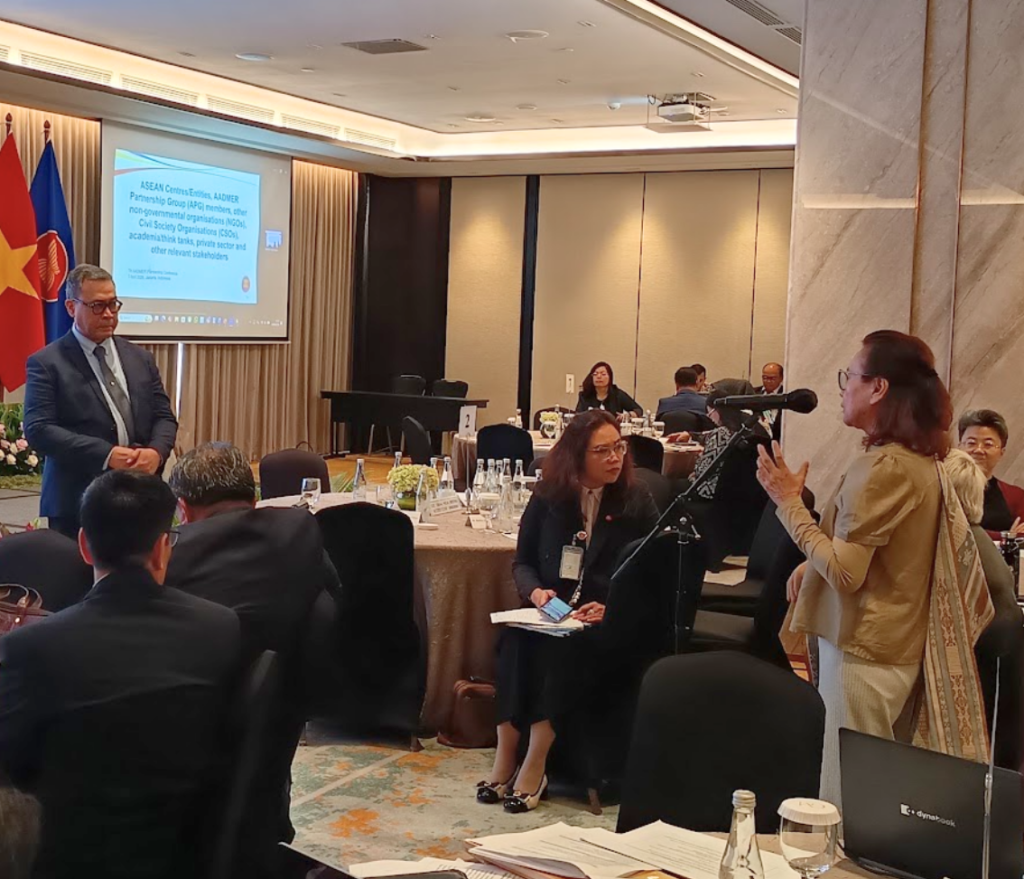
Jakarta, 2 April 2026 – The atmosphere at the Grand Melia Hotel in Jakarta was filled with the spirit of collaboration. Delegates from across nations and organizations gathered for the 7th AADMER Partnership Conference, a forum that showcased ASEAN’s commitment to strengthening disaster resilience. From the very beginning, the room buzzed with lively discussions.
The ASEAN Committee on Disaster Management (ACDM) opened the session by highlighting the importance of the ASEAN Agreement on Disaster Management and Emergency Response (AADMER). The focus was not just on theory but on practical steps: more realistic disaster simulations, stronger logistics, and updated humanitarian aid strategies. Behind these technical points lay a bigger vision. Priority Program 4 emphasized resilient recovery—a recovery process that is not only fast but also inclusive and sustainable. Meanwhile, Priority Program 5 underscored the importance of building bridges across regions, strengthening capacity, and sharing knowledge through innovation and technology.
What made this conference truly remarkable was the tangible support from international partners. Switzerland pledged continued assistance for early warning systems in Cambodia and Laos. France announced a €200,000 contribution to the AHA Center along with a new urban fire response training program. Australia reaffirmed its long-standing partnership, while Canada committed $7 million to the AHA Center and $5 million to the Grace project. Contributions also came from China, the European Union, India, Japan, South Korea, New Zealand, the United States, Germany, and Italy. Altogether, more than $25 million was pledged, alongside technical assistance and capacity-building programs. Amid the official speeches, the voices of civil society resonated strongly.
Local organizations, NGOs, and forums such as the ASEAN Disability Forum reminded everyone that disaster management must be inclusive—no group should be left behind. Recovery after disaster, they stressed, is not only about rebuilding structures but also about rebuilding lives with fairness and dignity. The conference concluded with a powerful call for collective action. It was a reminder that ASEAN and its global partners must continue to work hand in hand—strengthening early warning systems, advancing prevention, and ensuring that every recovery effort leads to a stronger future. At the Grand Melia that day, the conversations went beyond strategies. They carried hope, solidarity, and a shared belief that through collaboration, ASEAN can stand as a global leader in disaster management—rebuilding not just better, but wiser.
