ADF Chairperson Highlights Systemic Barriers to
Justice at CSW70 Side Event
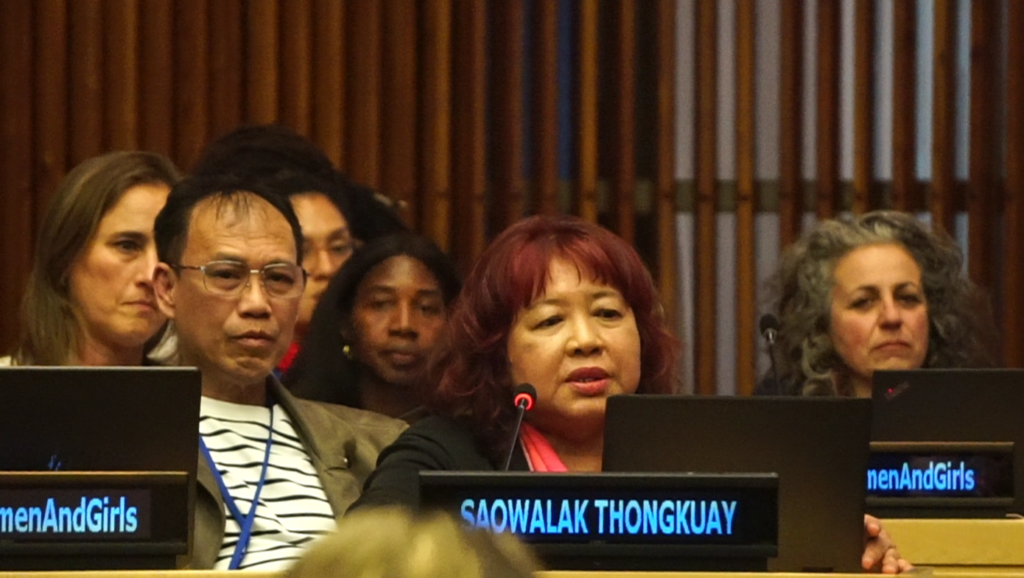
New York, 10 March 2026 — ASEAN Disability Forum (ADF) Chairperson, Ms. Saowalak Thongkuay, spoke at the side event titled “Bridging Systemic Gaps: Advancing Justice for All Women and Girls”, organized by UN Women at the ECOSOC Chamber, United Nations Headquarters, as part of the CSW70 series. The side event focused on addressing systemic gaps in access to justice for women and girls, particularly those from marginalized groups, including women with disabilities. In her intervention, Ms. Saowalak emphasized that despite progress made since the Beijing Platform for Action, structural barriers to justice continue to persist. “While we have seen progress over the past 30 years, structural barriers to justice persist, and in some contexts, we are witnessing new forms of backlash against women’s rights,” she stated. She highlighted that for women and girls with disabilities, these barriers are more complex due to intersecting forms of discrimination, including gender inequality, disability-based discrimination, poverty, and exclusion from decision-making processes. “For women and girls with disabilities, these barriers are deeper and more complex, shaped by intersecting inequalities,” she added.
Citing global studies, she noted that women with disabilities are three to four times more likely to experience gender-based violence compared to other women, yet their access to justice remains severely limited. She further illustrated real-life barriers faced by women with disabilities within justice systems. “A deaf woman cannot report abuse because there is no sign language interpreter at the police station. A woman with psychosocial disability may be denied the right to testify because she is considered ‘of unsound mind’. A wheelchair user arrives at court only to find there is no accessible entrance,” she explained.
According to Ms. Saowalak, these examples reflect a broader issue: justice systems have not been designed with the needs of women with disabilities in mind. “Justice systems have been designed without considering the needs of women with disabilities,” she stressed. She underscored that ensuring access to justice is not only a development priority but also a binding human rights obligation under international frameworks such as the Convention on the Rights of Persons with Disabilities (CRPD) and the Convention on the Elimination of All Forms of Discrimination Against Women (CEDAW). Ms. Saowalak also highlighted the importance of implementing CRPD principles, including equal recognition before the law and access to justice through procedural and reasonable accommodations. “Denying legal capacity or failing to provide accommodations constitutes discrimination and undermines the right to a fair trial,” she stated.
As a way forward, she called for structural reforms in justice systems, including ensuring accessibility, providing individualized support, and transitioning from substituted decision-making to supported decision-making. She also emphasized the importance of the meaningful participation of women with disabilities and their representative organizations in justice reform processes. Concluding her remarks, she stressed that the milestones of 30 years of the Beijing Platform for Action and 20 years of the CRPD must translate into concrete legal and systemic changes. “When justice becomes accessible to women with disabilities, justice becomes stronger for everyone,” she concluded. ADF’s participation in this side event reaffirms its commitment to advancing inclusive and accessible justice systems for women with disabilities globally.
